
Awero team
An unexpected invitation to a university-wide Open Badges movement
31 Mar, 22:19
People like stories… and the story behind this is really interesting,” says Associate Professor Dr. Ingrida Leščauskienė from VILNIUS TECH University.
Ingrida had been teaching computer game design at VILNIUS TECH for 9 years and in 2023 received an unexpected call from the university’s vice-rector for strategic partnerships. She recalls how that call set her on a new career trajectory: “‘Ingrida, tomorrow we have a meeting about Open Badges and possibly using them to deepen students’ engagement with international activities. Maybe it's something related to you and you want to join the meeting?’”
Accepting the invitation, Ingrida almost immediately found herself taking on a bigger role than she could have imagined, building the university’s badge system from the ground up.
At first, VILNIUS TECH was trying to solve a practical problem: post-COVID, students were losing interest in taking part in Erasmus+ studies abroad, so an innovative solution was needed to motivate them. However, once discussions really got started, the ambition shifted. “We broadened out from internationalisation to a wider scope,” Ingrida says. “And it became clear that being active after classes is really important for students and their future.”
Over three years, that unexpected start has grown into a substantial university-wide system: 5,500 users, 11,369 issued badges, seven non-formal learning programmes, and progression based pathways building from participation to activity, Meta and Uber badges. It recognises learning across volunteering, science, arts, sports, internationalisation, student representation, careers and technical creativity.
Starting from what students already do
At the outset Ingrida and the team decided to focus on the existing extra curricular activities that students do outside study programmes. “Hundreds of ways for students to express themselves already existed before our badge system, they just weren’t recognised,” she explains. “So the first step was to inventory them.”
The process identified more than 200 activities including volunteering at career days, foreign language teaching, taking part in sports and art clubs, wellbeing, promoting science, supporting the choir, joining library lessons or creating prototypes in the universities’ maker space. The next step, Ingrida says, was mapping the activities with the related competences students gained by taking part.
“We decided that we should concentrate on activity-plus-competency-based badges,” she explains. “So each badge includes what it was issued for, at least three competencies it is related to and a task.”
Those competencies are taken from the 17-skill framework which includes things like leadership, teamwork, initiative, sustainability and time management.
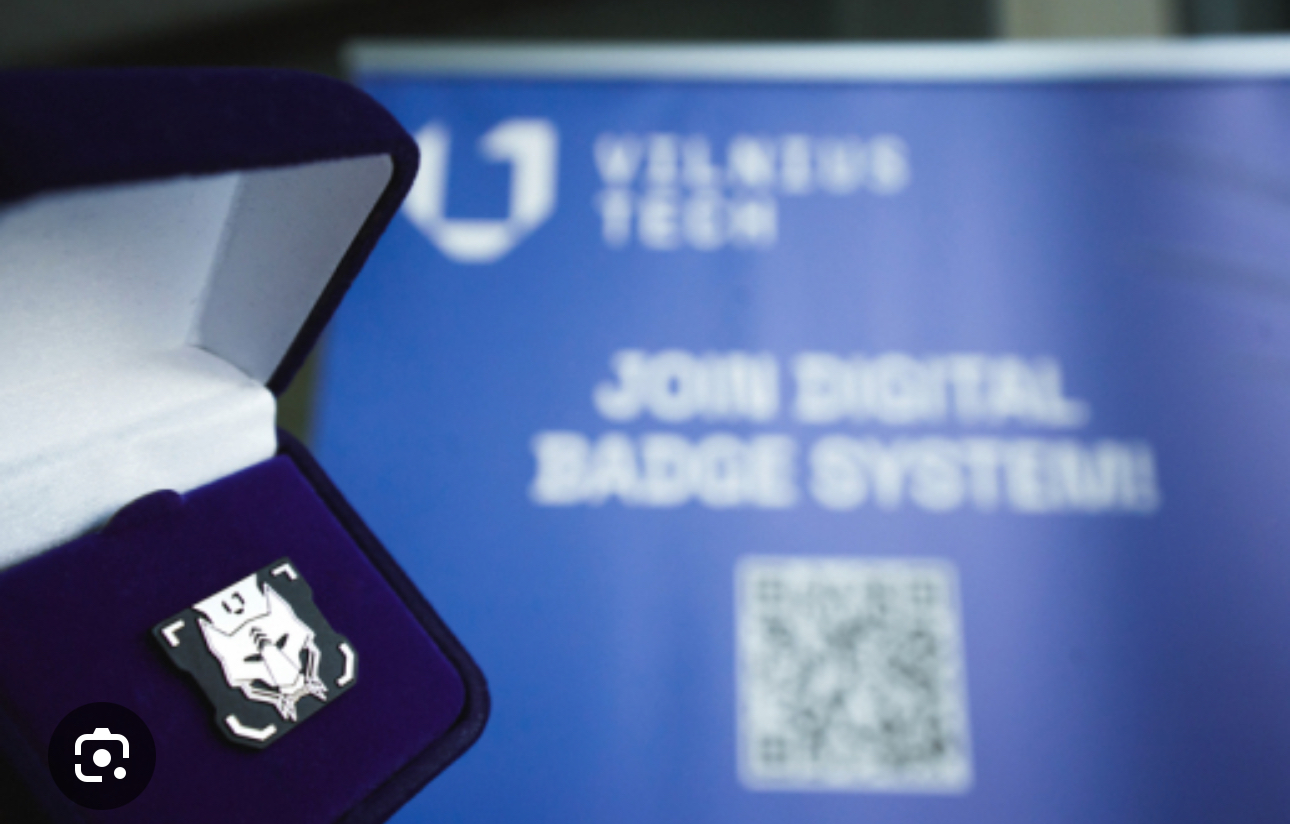
The result is more than an open badge system. It is, in Ingrida’s words, “an extra curricula activities menu;” a visible pathway showing learners what is possible to do in university and what it might add up to in the long-term. It's important that as students collect related badges they can build towards higher-level badges, with specific titles such as ‘explorer of scientific innovations,’ ‘wellbeing ambassador,’ or ‘pupil guide to studies.’
“People like titles,” Ingrida says, “because we always want to understand who we are.”
A game for serious learning
Ingrida talks about gamification often, but never casually. “It’s not just a game. It’s serious. So we have to ensure the right balance between engagement and meaning, motivation and real growth,” she explains.
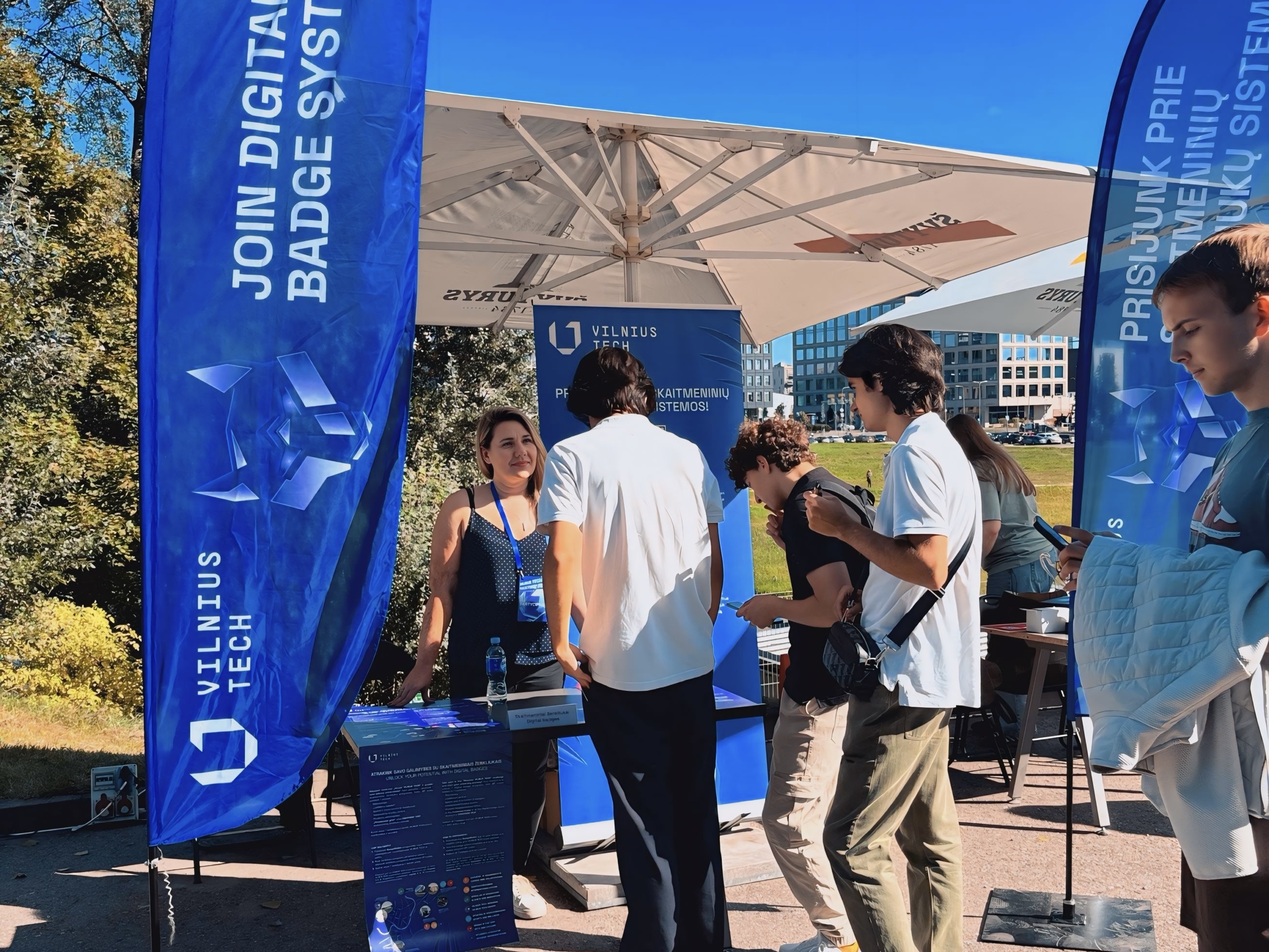
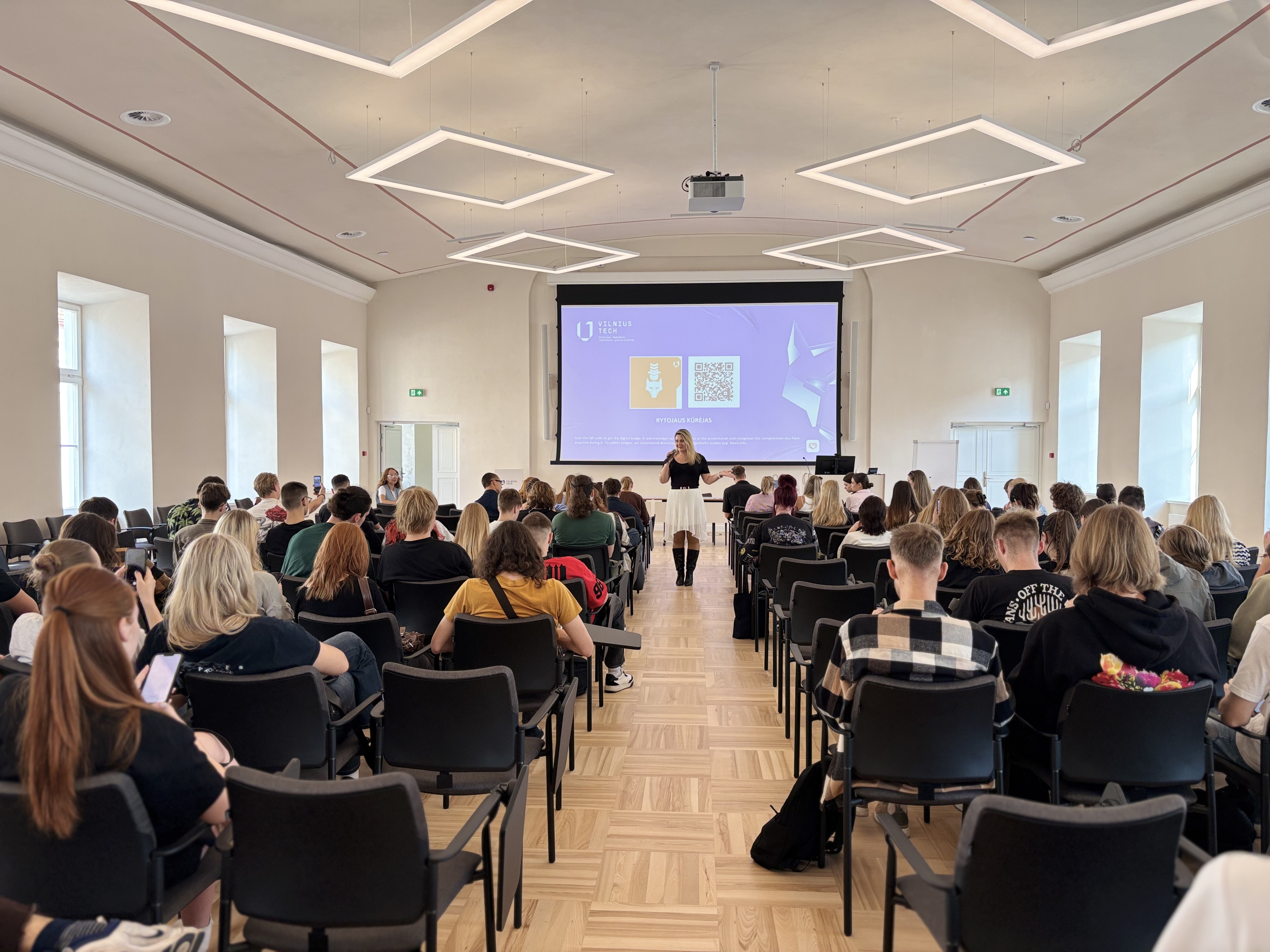
The game mechanics applied to the universities’ badge system, both work to get students started and keep them climbing their way up the hierarchy. Badges issued by simply scanning a QR-code at guest lectures, welcome-week competitions, or navigation based onboarding badges act as a hook.
“If students collect seven badges in the onboarding week, they can get prizes,” Ingrida says. “And after the contest, people begin to explore [the system and think] ‘ok, if I want to earn the ‘sport team administrator’ badge from the sports centre, so I need to go there and do the related tasks.’”
That process of onboarding attracts six or seven hundred new students to the badge system each September.
VILNIS TECH’s badge system’s hierarchy is another game mechanic which helps with motivation. Students can progress through the system from individual participation badges, to Meta badges for each programme, and finally Uber badges at the top level which are awarded at a special ceremony by the university rector or prorector.
This approach, Ingrida says, pays dividends: “It clearly shows that the student became an expert in a chosen area. But even if you achieve one Uber badge, you still have time to go for another in another non-formal education programme.”
All of this, while playful, also retains its serious purpose; as students collect badges, they have to submit evidence to explain what they’ve learned. That in turn is carefully reviewed and approved by a team of more than 25 staff from across the university.
Credible badges, inside and out
Ingrida and the team quickly identified that competences recognised through open badges are valuable to employers, so they’ve considered how students can present them in a professional format.
“If it's only in your Badge Wallet, you have to open the app to view it, and without understanding the technology behind it, it can appear to be nothing more than an image with some data,” she explains. “So we issue certificates [...] with all the branding from the university for credibility.”
“Beyond practical value, it’s also about recognition, feelings and how it looks. That's why certificates typically have ribbons or something like that, to give that feeling of accomplishment.”
However, Ingrida believes that the badge system’s deepest value is more personal.
“We know that self-reflection is a really difficult thing for people to do,” she says. “[But] the feedback from our students proves that our badges really helped them to better understand themselves.”
For Ingrida, asking learners to reflect is not an add-on. It is part of how badges gain value. Learners have to ask themselves: what did I get from this guest lecture? What skills did I gain from volunteering at that event? That process helps turn activity into learning, and learning into something they can name.
Ingrida imagines students asking themselves: “oh, I’m a science explorer! So what can I do?” From there, they begin connecting experiences into a possible future. “Maybe I can write a scientific article or work in research?” she hypothesises.
“Open Badges are not only for employment,” Ingrida explains. “First of all, it’s for your own achievement, and then people recognise it.”
This culture of self reflection and recognition that VILNIUS TECH is instilling in its students through its badge system, is what Ingrida puts at the top of her list of benefits. A successful badge system isn’t just well designed and credible, it helps learners see themselves differently.
Funded by the European Union. Views and opinions expressed are however those of the author(s) only and do not necessarily reflect those of the European Union or the European Education and Culture Executive Agency (EACEA). Neither the European Union nor EACEA can be held responsible for them.

Share:

Awero not-for-profit organisation manages this platform and develops it together with leading educational organisations. The European Union's programme Erasmus+ granted co-funding for building the first version of this platform. Contact support@awero.org.
Platform
Change to another language: